

When Is the Best Time to Take a Pregnancy Test?
This article is for informational purposes only and is not a substitute for professional medical advice, diagnosis, or treatment. Always seek the advice of your physician or another qualified health provider with any questions you may have regarding a medical condition.
When Is the Best Time to Take a Pregnancy Test?
Key Takeaways
- The most accurate time to take a pregnancy test is on the first day of your missed period.
- Tests work by detecting the hormone hCG, which increases rapidly after a fertilized egg implants in the uterus.
- Testing too early can lead to a false-negative result because hCG levels might be too low to detect.
- A faint positive line usually means you are pregnant, but it's important to read the results within the test's specified time frame to avoid misinterpreting an evaporation line.
- For irregular cycles, wait for the length of your longest cycle or test about three weeks after potential conception.
That anxious time of waiting—whether you've missed your period or you're in the "two-week wait" after ovulation—can be filled with questions and uncertainty. The biggest question of all is often: when is the right time to take a home pregnancy test? Testing too soon might give you a confusing or inaccurate result, while waiting can feel impossible. Understanding how pregnancy tests work and how your body changes after conception is the key to getting a reliable answer and the peace of mind you're looking for.
How Do Home Pregnancy Tests Work?
Home pregnancy tests are designed to detect a specific hormone in your urine called human Chorionic Gonadotropin, or hCG. This hormone is produced by the placenta shortly after a fertilized egg implants in the lining of your uterus. Implantation typically happens about 6 to 12 days after conception.
Once implantation occurs, your body begins to produce hCG, and its levels double approximately every 48 to 72 hours in the early stages of pregnancy. It's this rapid increase that allows a home pregnancy test to confirm whether you're pregnant. The test strip contains antibodies that react to the presence of hCG, typically displaying a line or a symbol to indicate a positive result.
Why Does Timing Matter for an Accurate Test?
The accuracy of a home pregnancy test is entirely dependent on having a detectable level of hCG in your urine. If you test too early, your hCG levels might still be too low for the test to pick up, even if implantation has occurred. This can result in a "false negative"—a negative test result when you are actually pregnant.
This is why most experts and test manufacturers recommend waiting until at least the first day of your missed period. By this time, if you are pregnant, your hCG levels will have likely risen high enough to be easily detected by a standard home test. Waiting ensures that you give your body enough time to produce the hormone needed for an accurate result, helping you avoid unnecessary confusion and emotional distress from a premature test.
What is the Best Time to Take a Pregnancy Test?
For the most reliable results, follow these guidelines:
- Wait for a Missed Period: The gold standard is to test on or after the first day your period is due. This provides the highest accuracy.
- Test in the Morning: Use your first-morning urine if possible. It's the most concentrated and will contain the highest level of hCG, making detection easier.
- Dealing with Irregular Periods: If your cycles are irregular, it can be tricky to know when to test. A good guideline is to wait for the duration of your longest cycle in recent months. For example, if your cycles range from 30 to 36 days, wait until day 37 before testing.
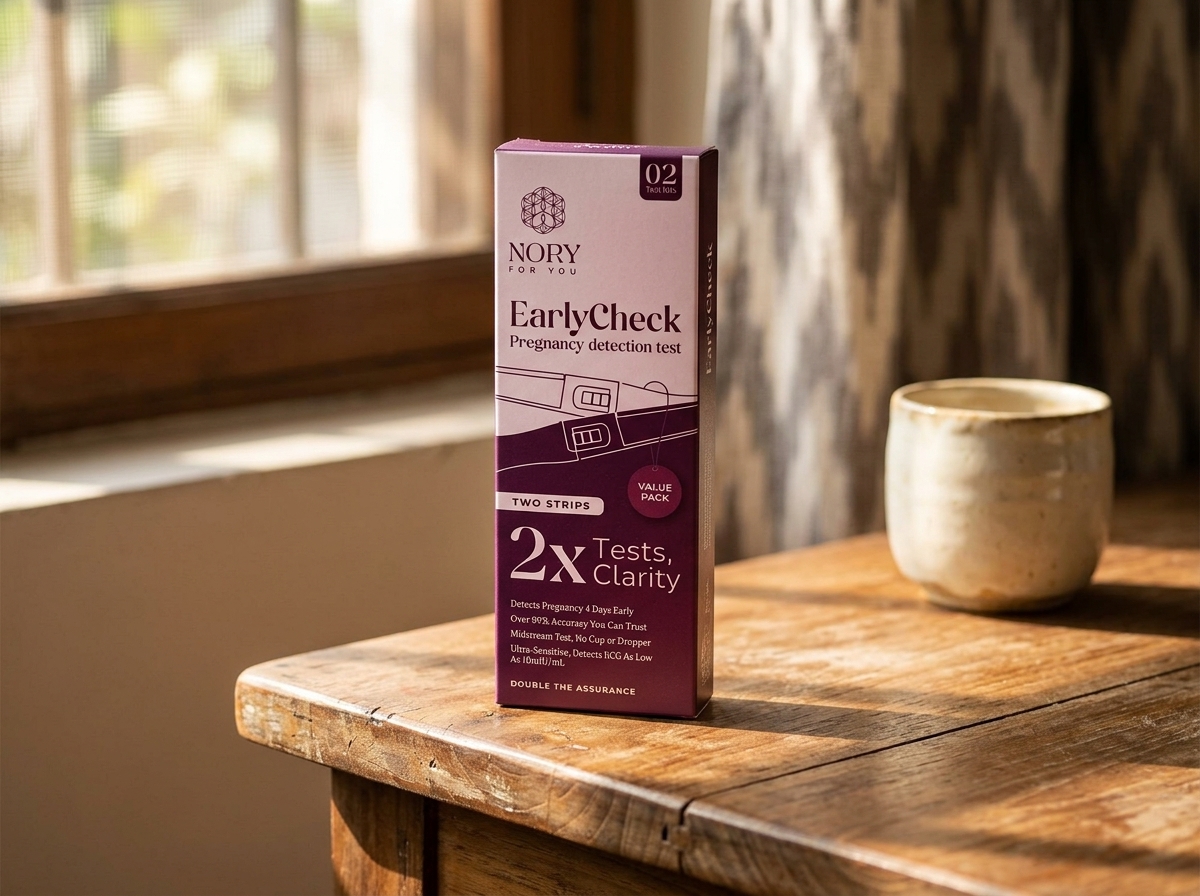
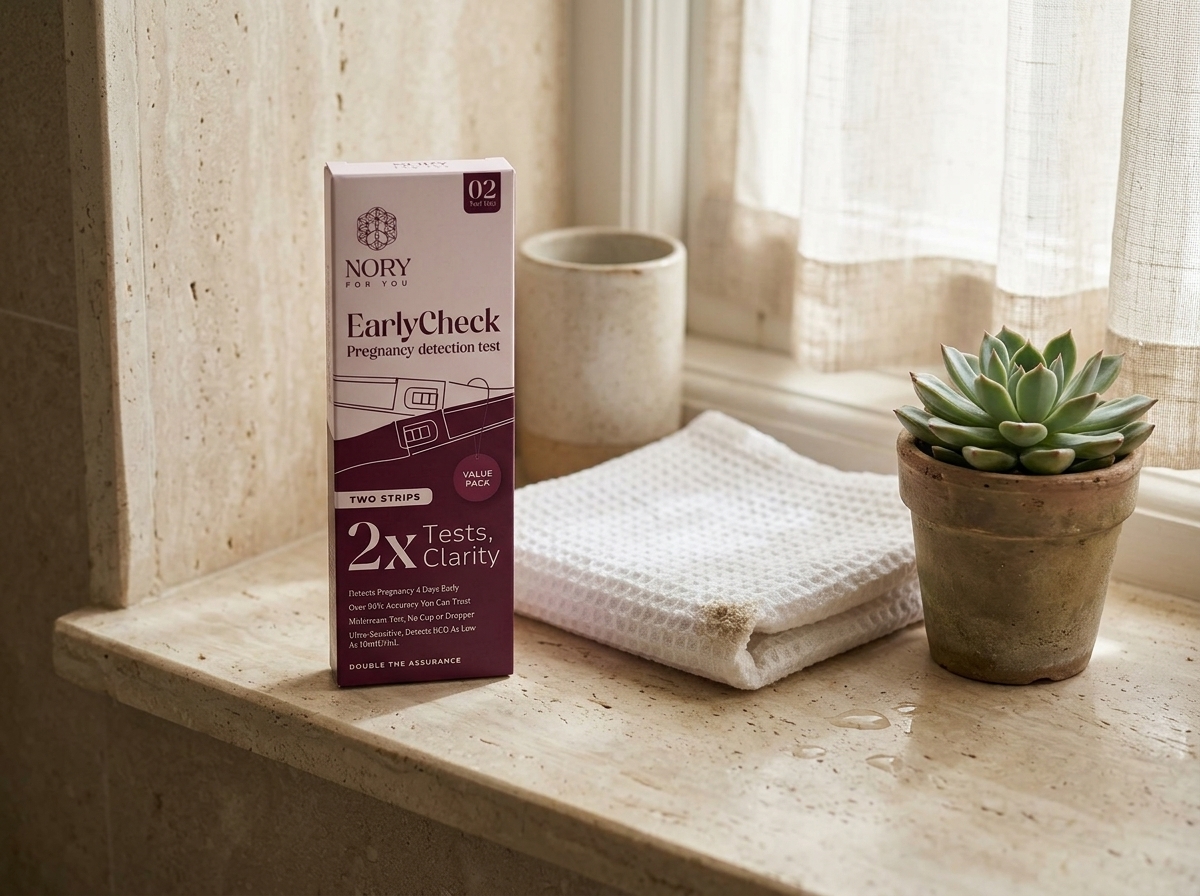
Some tests, like the Nory Pregnancy Test Kit, are highly sensitive and can detect pregnancy up to four days before your expected period. While this is an option, it is important to understand that testing before your missed period is less accurate and carries a higher risk of a false-negative result. If you test early and get a negative result, it's a good idea to retest in a few days if your period still hasn't arrived.
You can find the Nory Pregnancy Test Kit on our website or on Amazon.
Understanding a Faint Line on a Pregnancy Test
Seeing a faint line on a pregnancy test can be confusing. Does it mean you're pregnant or not? In most cases, a faint positive line does indicate pregnancy. It usually means that your hCG levels are detectable, but still relatively low. This is common if you are testing very early.
However, it's crucial to distinguish a faint positive from an evaporation line. An evaporation line is a faint, colorless streak that can appear in the test window as the urine dries. Here’s how to tell the difference:
| Characteristic | Faint Positive Line | Evaporation Line |
|---|---|---|
| Appearance Time | Appears within the recommended reading time (usually 3-5 minutes). | Appears after the recommended reading time has passed. |
| Color | Has some color (pink or blue, depending on the test). | Is typically colorless, gray, or looks like a faint indentation. |
| Meaning | Indicates the presence of hCG (pregnancy). | Is a result of the test drying and does not indicate pregnancy. |
To avoid confusion, always read the test results within the timeframe specified in the instructions. If you see a faint line within that window, the best next step is to wait a day or two and test again. If you are pregnant, the line should become darker as your hCG levels increase.
Should You Retest After a Negative Result?
If you get a negative result but still believe you could be pregnant (for example, if your period is late), it’s a good idea to wait a few days to a week and then retest. There are several reasons why you might get a false negative:
- Testing Too Early: As mentioned, your hCG levels may have been too low to detect.
- Diluted Urine: Drinking a lot of fluids before testing can dilute your urine and lower the concentration of hCG.
- Test Error: While rare, using an expired test or not following the instructions correctly can lead to an inaccurate result.
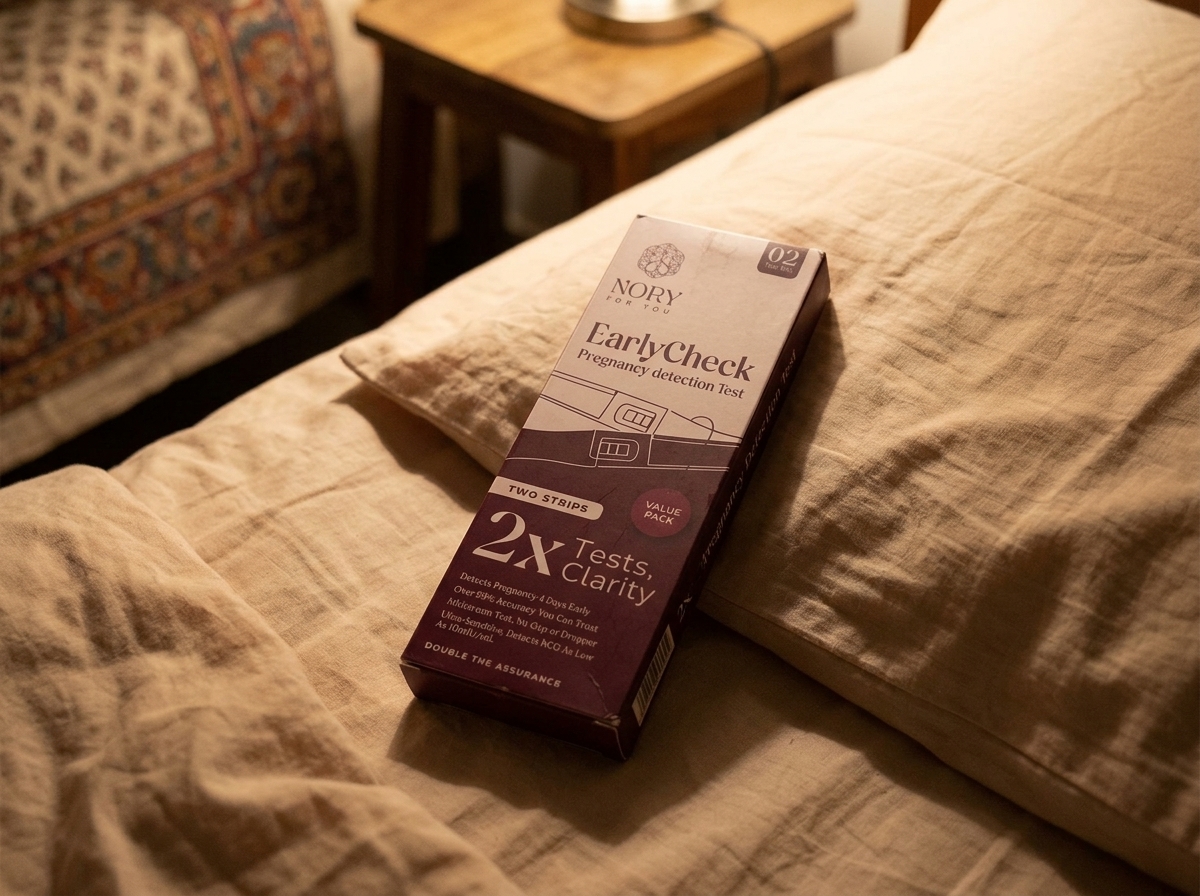
Retesting with your first-morning urine a few days later will give your body more time to produce detectable levels of hCG. Using a reliable test like the Nory Pregnancy Test Kit can also provide confidence in your results.
When Should You See a Doctor?
While home pregnancy tests are a reliable first step, you should always confirm your results with a healthcare professional. Make an appointment with your doctor if:
- You get a positive home pregnancy test result.
- Your period is more than a week late, and you are still getting negative test results.
- You have questions about your results or are experiencing unusual symptoms.
A doctor can confirm your pregnancy with a blood test, which is more sensitive than a urine test, and provide guidance on the next steps for a healthy pregnancy. If you have been trying to conceive for a while without success, a doctor can help explore all your options.
Common Questions About Pregnancy Tests
How early can a pregnancy test detect pregnancy?
Some sensitive home pregnancy tests may detect the hCG hormone in your urine as early as four to five days before your expected period. However, for the most accurate result, it is best to wait until the first day of your missed period.
Can I get a false negative if I test too early?
Yes, testing too early is the most common reason for a false-negative result. Your body may not have produced enough hCG for the test to detect, even if you are pregnant. If you still suspect you might be pregnant, wait a few days and retest.
What is the best time of day to take a pregnancy test?
Taking a pregnancy test first thing in the morning is recommended. Your first-morning urine is the most concentrated and will have the highest levels of the hCG hormone, making it easier for the test to provide an accurate reading.
How accurate are home pregnancy tests?
When used correctly and after a missed period, most home pregnancy tests are over 99% accurate. Accuracy can decrease if the test is taken too early, instructions are not followed, or the test has expired.
What should I do if I have irregular periods and want to take a pregnancy test?
If you have irregular periods, it can be difficult to determine when to test. A good rule of thumb is to wait for the length of your longest menstrual cycle in recent months before testing. Alternatively, you can test about 3 weeks after you suspect you may have conceived.
References
- Mayo Clinic. (2023). Home pregnancy tests: Can you trust the results?
- National Health Service (NHS). (2022). Doing a pregnancy test.
- American College of Obstetricians and Gynecologists (ACOG). (2022). Pregnancy Testing.
- Cleveland Clinic. (2022). Pregnancy Tests.
- Planned Parenthood. (n.d.). Pregnancy Tests.
when to take a pregnancy test
how early can you take a pregnancy test
when to take pregnancy test after missed period
what happens if you take a pregnancy test too early
faint line on pregnancy test what does it mean
pregnancy test accuracy before missed period
how do pregnancy tests work hCG
best time of day to take pregnancy test
pregnancy test irregular periods when to take
when is the best time to take a pregnancy test
how long to wait before taking a pregnancy test