

Does Lubricant Affect Sperm? A Guide for Conception
This article is for informational purposes only and does not constitute medical advice. Please consult with a healthcare professional for any health concerns or before making any decisions related to your health or treatment.
Does Lubricant Affect Sperm? A Guide for Conception

This article explains how certain lubricants can impact sperm health and why choosing a fertility-friendly option is important when trying to conceive. It provides a clear guide for couples in India on what to look for in a lubricant to support their journey.
- Understand how lubricant properties like pH and osmolality can affect sperm.
- Identify ingredients in common lubricants that may be harmful to sperm.
- Learn what makes a lubricant 'fertility-friendly'.
- Find guidance on selecting a safe lubricant to support your conception journey.
Yes, some lubricants can affect sperm movement and viability under laboratory conditions, an important consideration for couples trying to conceive. For many, personal lubricants are essential for comfort, but the concern that they might hinder the chances of pregnancy is valid. Understanding how and why this happens is the first step toward making an informed choice that supports your fertility journey.
Do All Lubricants Affect Sperm? Understanding the Concern
When you're trying to conceive, every detail feels important. It's common to wonder if your choice of personal lubricant could be working against you. The concern is scientifically sound: for sperm to successfully reach and fertilize an egg, they must travel through the cervix and uterus, a journey that can be impacted by the vaginal environment. Natural cervical mucus during the fertile window is perfectly designed to protect and assist sperm.
However, many common lubricants are not formulated with conception in mind. Their primary purpose is to reduce friction, and their chemical properties can sometimes create an environment that is less than ideal for sperm. This doesn't mean all lubricants are harmful, but it highlights the need for awareness and careful selection when you are trying to get pregnant.
How Common Lubricants Can Affect Sperm in Lab Studies
Scientific studies, often conducted in a lab (in vitro), have shown that certain lubricant formulations can negatively impact sperm. Two key properties are at the center of this issue: pH and osmolality.
- pH Level: The pH of a healthy vaginal environment is typically acidic (between 3.8 and 4.5), which helps protect against infections. However, during the fertile window, cervical mucus becomes more alkaline (pH 7.0-8.5) to create a sperm-friendly corridor. Many popular lubricants have an acidic pH for daily comfort, but this acidity can be hostile to sperm, immobilizing or killing them on contact.
- Osmolality: This refers to the concentration of solutes in a solution. Sperm have a specific internal osmolality. When a lubricant is hyperosmotic (has a higher concentration of solutes), it can draw water out of sperm cells, causing them to dehydrate, shrivel, and lose their motility. Conversely, a hypoosmotic lubricant can cause sperm to take on too much water and burst. An isotonic lubricant—one with a similar osmolality to semen—is ideal.
Ingredients like petroleum, propylene glycol, and certain preservatives found in everyday lubricants have also been shown to reduce sperm motility and viability in these studies. According to a 2014 study published in Spermatogenesis, even minimal exposure to some commercial lubricants resulted in a significant decrease in sperm motility within 60 minutes.
What Makes a Lubricant 'Fertility-Friendly'?
A 'fertility-friendly' or 'sperm-friendly' lubricant is designed specifically to be safe for sperm and supportive of the conception process. These products are formulated to mimic the natural conditions of the vagina during a woman's fertile window.
Here are the key characteristics to look for:
| Characteristic | Why It Matters for Fertility |
|---|---|
| Isotonic Formulation | The lubricant has an osmolality level that matches semen and cervical fluid, preventing damage to sperm cells. |
| pH-Balanced | The pH is within the optimal range for sperm survival and motility (typically 7.2 to 8.5). |
| Water-Based | Water-based formulas are generally less likely to contain oils or silicones that can trap or harm sperm. |
| Free of Harmful Ingredients | They are formulated without parabens, glycerin, silicones, or petroleum that are known to be potentially spermicidal. |
These specialized lubricants provide comfort and reduce friction without creating a barrier or a harmful environment for sperm. They allow sperm to swim freely, helping them on their journey to the egg.
Choosing the Right Fertility-Friendly Lubricant for Your Journey
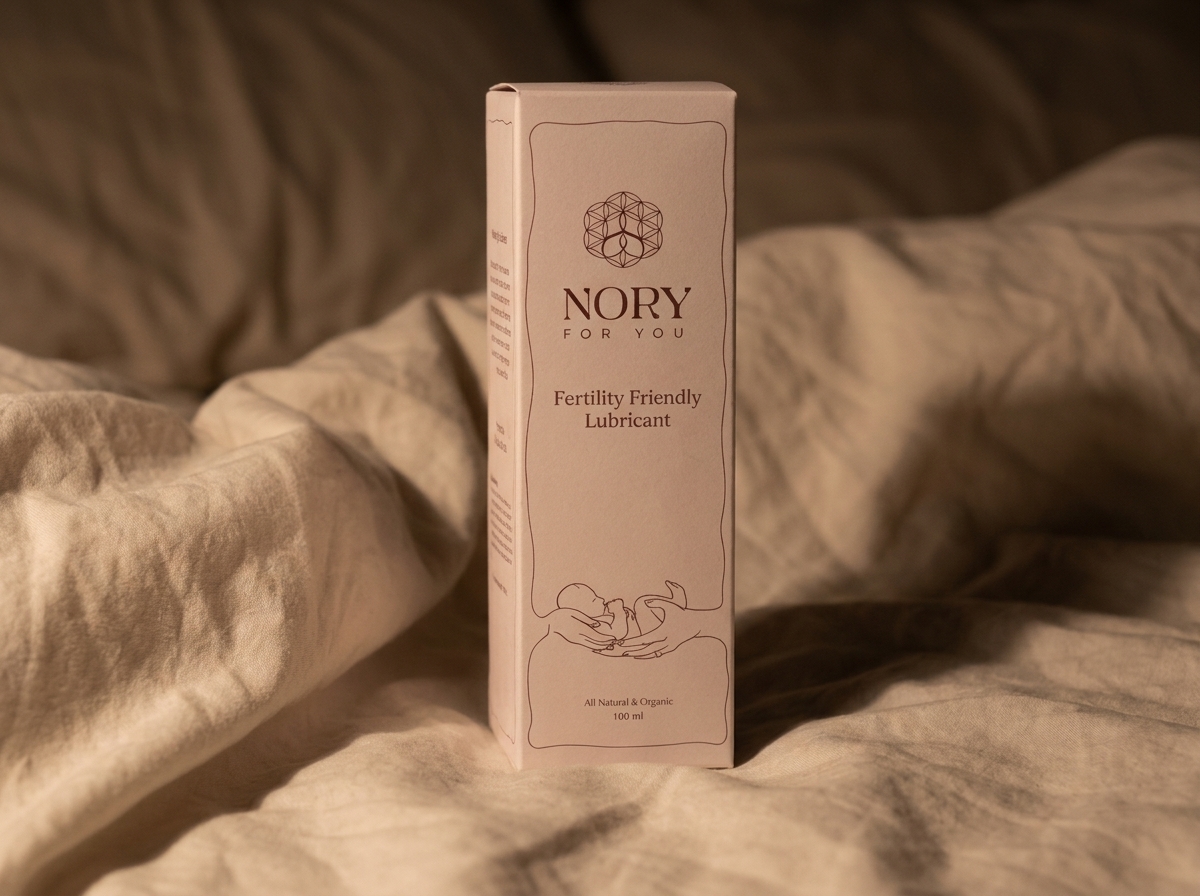
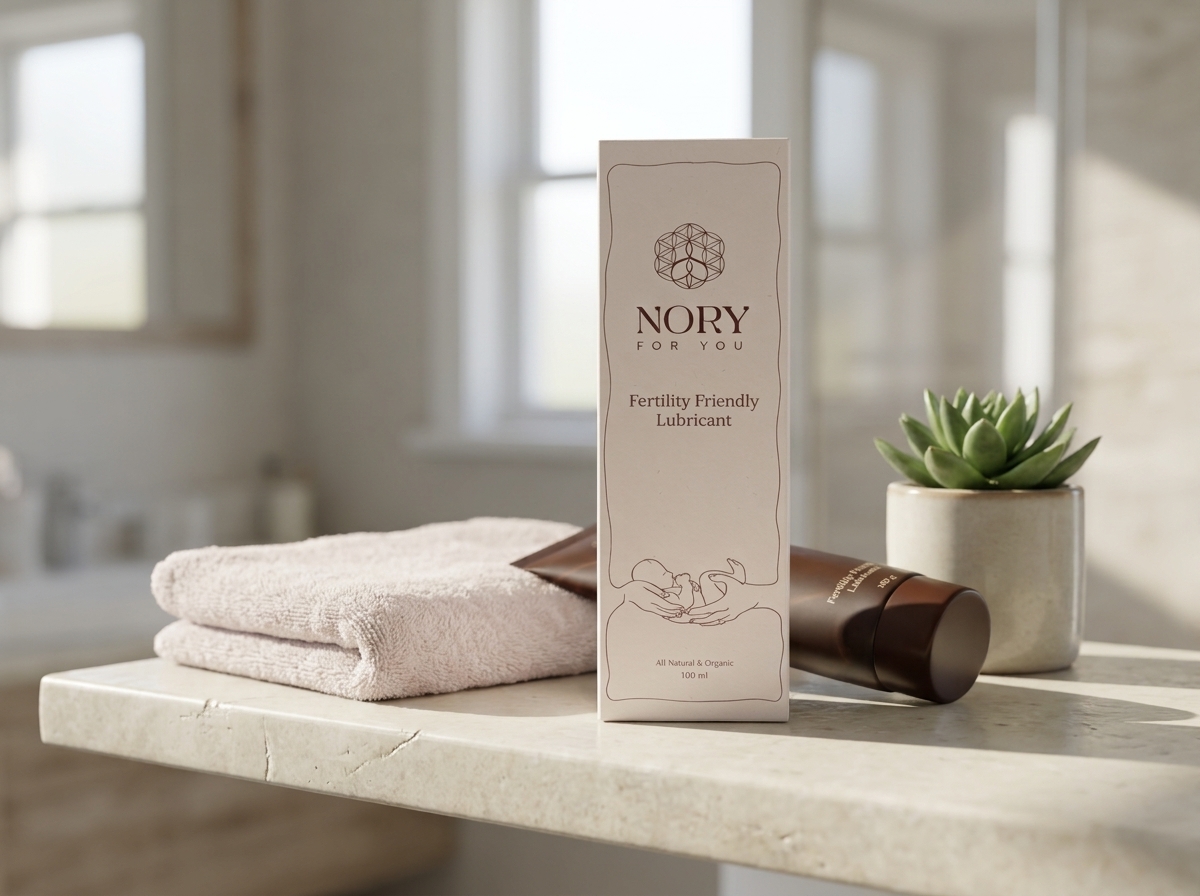
When selecting a lubricant to use while trying to conceive, it's essential to read labels and choose a product explicitly marketed as fertility-friendly. If you do not experience vaginal dryness, you do not need to use a lubricant. The Nory Fertility-Friendly Lubricant is designed with these needs in mind. It is a water-based, pH-balanced formula created to resemble the consistency of natural cervical mucus. Fertility-friendly lubricants are designed to be sperm-safe, helping to avoid the potential negative effects of standard lubricants on sperm motility. It is also available on Amazon.
For some couples, conception can be a source of stress, and discomfort during intercourse only adds to it. Using a supportive lubricant can help make the experience more comfortable and enjoyable. For some couples, at-home insemination is considered when intercourse is difficult (due to reasons like performance anxiety or vaginismus). A fertility-friendly lubricant can be a helpful tool in these situations as well, though it is not a treatment for any underlying medical condition.
When to See a Doctor About Fertility Concerns
While making informed choices about products like lubricants is a positive step, it's also crucial to know when to seek professional medical advice. Conception is a complex process, and many factors beyond lubricant choice can play a role.
Consider consulting a doctor or fertility specialist if:
- You are under 35 and have been trying to conceive for over a year.
- You are over 35 and have been trying to conceive for over six months.
- You or your partner have a known medical condition that could affect fertility.
- You have irregular menstrual cycles or other concerning symptoms.
A specialist can provide a comprehensive evaluation, offer guidance, and discuss potential next steps. Using tools like ovulation tests and fertility-friendly lubricants can be part of a proactive approach at home, but they are not a substitute for professional medical care when needed.
Frequently asked questions
Can regular lube prevent pregnancy?
While regular lubricants are not a form of contraception, some can hinder sperm movement (motility) in laboratory settings. For couples trying to conceive, it's advisable to use a fertility-friendly lubricant to avoid any potential interference.
What ingredients in lubricants are bad for sperm?
Certain ingredients like petroleum, silicone, and parabens can be harmful to sperm. Additionally, lubricants with a pH or osmolality that is not balanced for the vaginal environment can negatively affect sperm motility and viability.
Is saliva a fertility-friendly lubricant?
No, saliva is not recommended as a lubricant when trying to conceive. It contains digestive enzymes that can damage sperm and reduce their ability to swim, potentially impacting your chances of conception.
How do fertility lubricants work?
Fertility-friendly lubricants are specifically formulated to be isotonic with balanced pH, mimicking the natural environment of cervical mucus. This ensures they don't harm sperm or impede their journey, providing comfort without interfering with sperm function.
How often should you use fertility lubricant?
You can use fertility-friendly lubricant as needed during intercourse in your fertile window. The goal is to ensure comfort, which can help make the experience more relaxed and positive for both partners.
References
- World Health Organization. (2010). WHO laboratory manual for the examination and processing of human semen.
- American Society for Reproductive Medicine. (2022). Optimizing Natural Fertility: a committee opinion.
- Tagatz, G. E., et al. (2014). The effects of lubricants on sperm motility in vitro. Spermatogenesis.
- Practice Committee of the American Society for Reproductive Medicine. (2013). Fertility and Sterility: The clinical relevance of 'sperm-friendly' lubricants.
- RESOLVE: The National Infertility Association. Sex & Infertility.
does lubricant affect sperm
can personal lubricant affect sperm
fertility safe lubricant
best lubricant for trying to conceive india
is normal lube bad for sperm
what lubricants are sperm friendly
does k-y jelly affect sperm
how to choose fertility friendly lubricant
what is fertility friendly lubricant
sperm-friendly lube India
safe lubricant when trying to get pregnant