

What Is At-Home Insemination? A Beginner's Guide to IVI
What Is At-Home Insemination? A Beginner's Guide to IVI
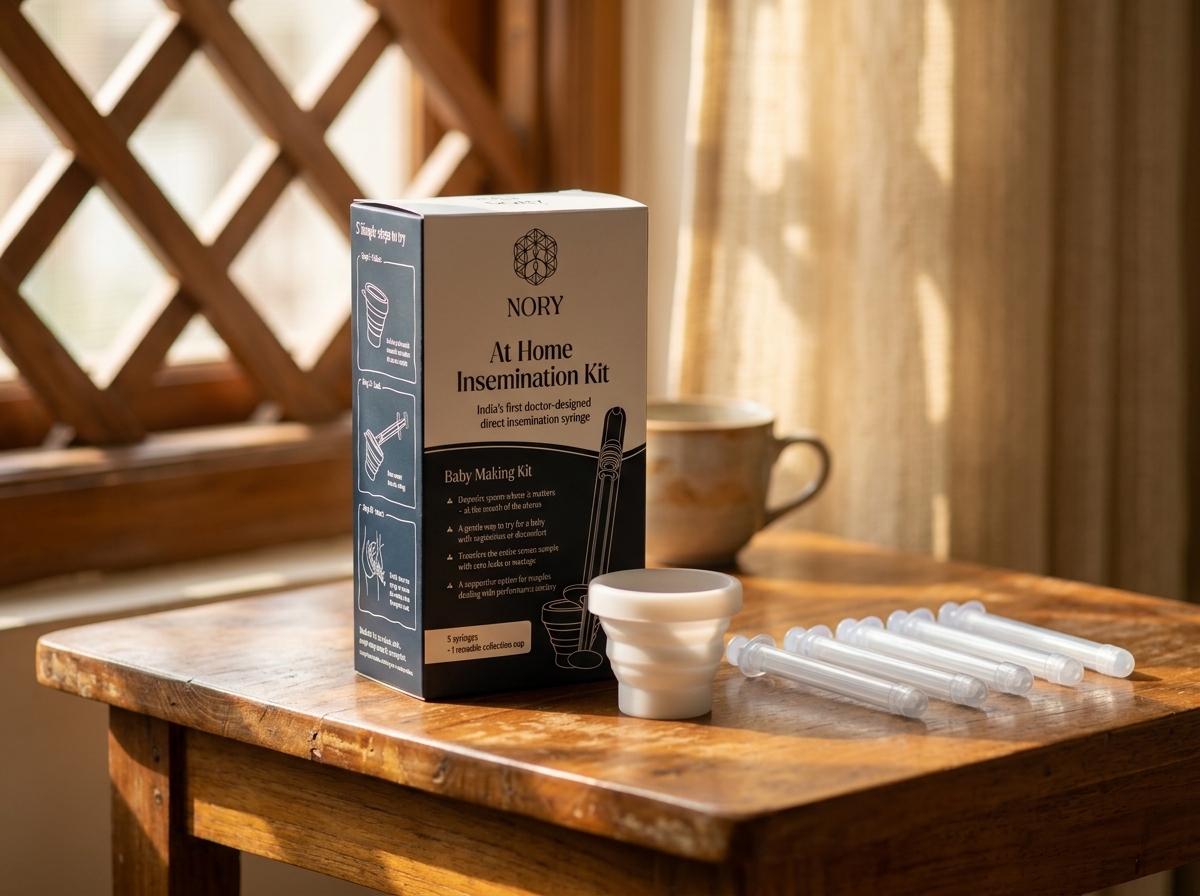
In this article
- At-home insemination, or Intravaginal Insemination (IVI), is a private, non-clinical method to help conception by placing sperm near the cervix.
- It differs from clinical procedures like IUI (Intrauterine Insemination) and IVF (In-Vitro Fertilization), which are performed in a medical setting.
- Timing with your fertile window is crucial, and ovulation test kits can help predict your most fertile time by detecting the pre-ovulatory hormone surge.
- Proper hygiene and preparation are essential for a safe process.
- Specially designed at-home insemination kits can provide the necessary sterile tools for the procedure.
This guide from Nory is for informational purposes only and is not a substitute for professional medical advice. Please consult with a healthcare provider for any health concerns or before making decisions about your fertility journey.
For couples in India trying to conceive, the journey can feel both exciting and overwhelming. When timed intercourse is difficult or hasn't led to a pregnancy, you might start exploring other options. One method gaining attention for its privacy and accessibility is at-home insemination, also known as intravaginal insemination (IVI). It’s a way to try for a baby in the comfort of your own home, on your own terms. This guide explains what IVI is, how it works, and what you need to know to approach it safely as a beginner.
Who is At-Home Insemination For?
This method is intended for couples who are experiencing mechanical barriers to intercourse, such as vaginismus or performance anxiety, and are looking for a private, non-clinical way to attempt conception. It provides a way to bypass physical or psychological challenges with intercourse, allowing for conception in a less stressful environment. It is not a treatment for the underlying conditions causing these difficulties, and consulting a healthcare professional for those conditions is recommended.
How does At-Home Insemination (IVI) differ from IUI and IVF?
At-home insemination is a method of placing sperm into the vagina near the cervix using a sterile, needle-less syringe. The goal is to mimic natural conception by giving sperm a direct path to the cervical opening, helping them on their way to the fallopian tubes to meet an egg. It's a non-clinical approach that can be considered by couples trying to conceive.
| Feature | At-Home Insemination (IVI) | Intrauterine Insemination (IUI) | In-Vitro Fertilization (IVF) |
|---|---|---|---|
| Location | At home | Clinic or hospital | Clinic and laboratory |
| Procedure | Sperm is placed in the vagina near the cervix. | Washed and concentrated sperm is placed directly into the uterus. | Eggs are retrieved and fertilized with sperm in a lab; the resulting embryo is transferred to the uterus. |
| Performed By | Yourself or your partner | Doctor or trained medical professional | Team of fertility specialists and embryologists |
| Sperm Prep | No special preparation required | Sperm is "washed" to remove seminal fluid and select the most motile sperm. | Sperm is washed and prepared for fertilization in the lab. |
The key difference lies in the location and complexity. IVI is a simpler process that you manage yourself, while IUI and IVF are medical procedures that involve more steps and are performed by fertility specialists in a clinical setting.
Why is Timing Key for At-Home IVI?
Success with at-home insemination, much like natural conception, depends heavily on timing. You need to perform the insemination during your fertile window—the few days each month when you are most likely to get pregnant. This window typically includes the five days leading up to ovulation and the day of ovulation itself.
Tracking your cycle is essential. While methods like calendar tracking or monitoring cervical mucus can be helpful, one of the most reliable ways to predict your most fertile time is by using an ovulation test kit. These tests work by detecting a surge in Luteinizing Hormone (LH) in your urine, which typically occurs 24-36 hours before ovulation is expected to happen. A positive result indicates that ovulation is likely approaching, making it the best time to attempt insemination. It's important to remember that these kits predict ovulation; they don't confirm that it has actually occurred.
For those looking for a way to track ovulation, the Nory OvuTrack Ovulation Test Kit is designed to help you track your cycle and identify your fertile days. It is also available on Amazon.
Are There Essential Preparation and Hygiene Steps?
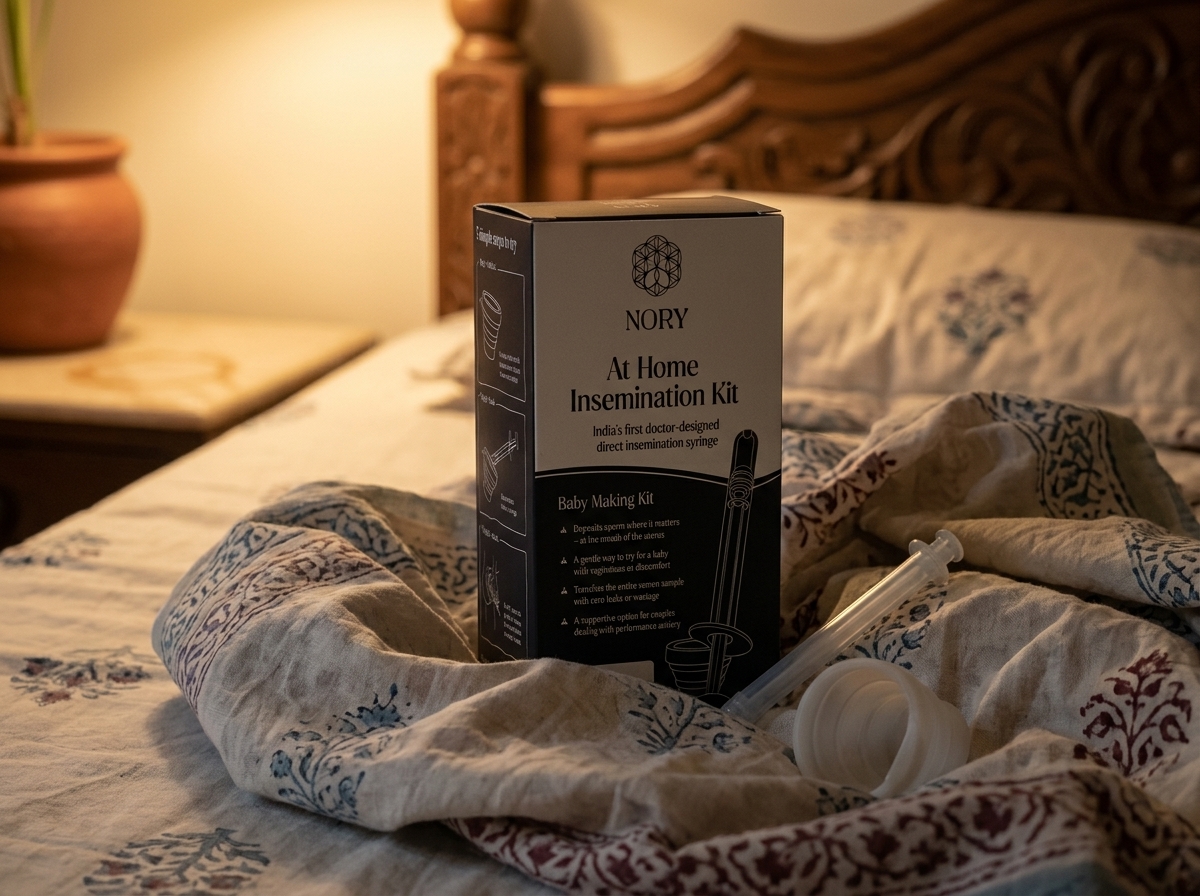
Since at-home insemination is a process you manage yourself, ensuring safety and hygiene is critical. Following best practices helps minimize any risk of infection and creates a positive, stress-free experience.
- Use Sterile Equipment: Only use a sterile, single-use syringe and a clean collection cup. Never reuse syringes. At-home insemination kits are designed for this purpose.
- Wash Your Hands: Thoroughly wash your hands with soap and water before handling any of the equipment or performing the insemination.
- Clean Collection: The semen sample should be collected in a clean, dry cup. Avoid using any lubricants during collection unless they are specifically marked as "fertility-friendly," as many standard lubricants can harm sperm.
- Comfortable Environment: Choose a time and place where you feel relaxed and won't be interrupted. Lie down in a comfortable position, perhaps with pillows under your hips to elevate your pelvis.
- Rest Afterwards: After the insemination, it is recommended to remain lying down for 15-30 minutes. This allows time for the sperm to travel towards the cervix.
A Step-by-Step Guide to At-Home Intravaginal Insemination
The Nory IVI Self-Insemination Kit provides all the essential, sterile components you need. It comes with single-use syringes and a reusable collection cup, designed to be easy to use. Here’s a general guide:
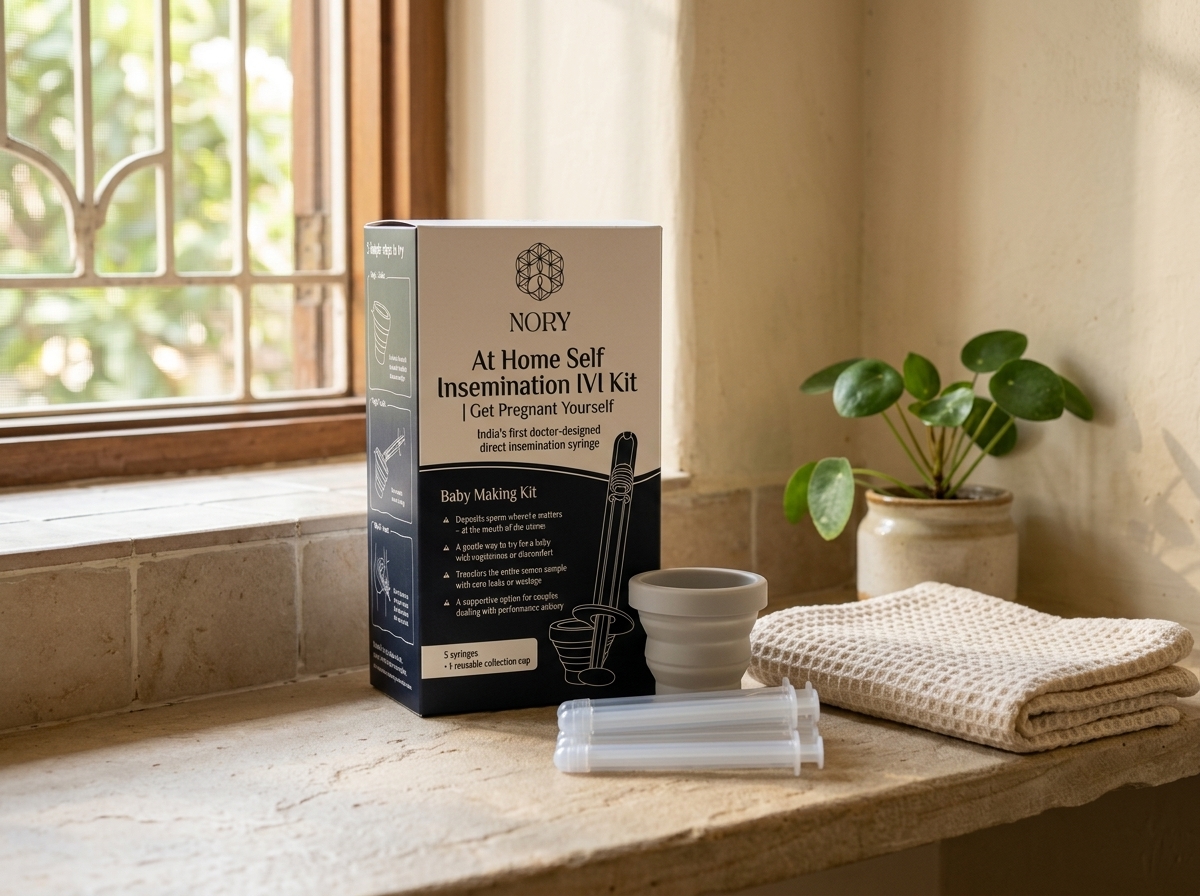
- Collect the Sample: Your partner provides a semen sample into the clean, sterile collection cup provided in the kit.
- Draw the Semen: Carefully draw the semen from the cup into the sterile, needle-less syringe.
- Get Comfortable: Lie down in a relaxed position with your hips slightly elevated.
- Insert and Deposit: Gently insert the syringe into your vagina, similar to inserting a tampon, and push the plunger to deposit the semen near your cervix.
- Rest: Remove the syringe and rest for at least 15-20 minutes.
The Nory IVI Kit is also available on Amazon for discreet and fast delivery.
What Can You Expect After At-Home IVI?
The "two-week wait"—the period between ovulation and when you can take a pregnancy test—can be filled with anticipation. The success of at-home insemination depends on several factors, including accurate ovulation timing, sperm quality, and your overall reproductive health. It may take a few cycles to be successful, which is also true for natural conception.
After about two weeks, you can take a home pregnancy test. For accurate results, it's best to wait until the first day of your missed period. Testing too early can sometimes result in a false negative because the pregnancy hormone (hCG) may not be high enough to be detected.
When it’s time to test, using a reliable test is key. The Nory Pregnancy Test Kit is designed for home use to help you detect pregnancy. It is also available on Amazon.
Understanding the Indian Legal Context
In India, assisted reproductive technology is strictly regulated. While at-home insemination is a private method, it is important to be aware that it falls outside the regulatory framework of licensed fertility clinics. We recommend consulting with a legal professional if you have questions regarding parentage or documentation.
When Should You Consider Seeing a Doctor?
While at-home insemination is a great first step for many, it’s important to remember that it is not a substitute for a professional fertility evaluation. If you have been trying to conceive for a while without success, consulting a doctor or fertility specialist is a good next step. General guidelines recommend seeing a doctor if:
- You are under 35 and have been trying to conceive for over a year.
- You are over 35 and have been trying for six months.
- You have a known medical condition that could affect fertility, such as PCOS, endometriosis, or irregular cycles.
- You or your partner have concerns about sperm health.
If you have not achieved pregnancy after 6–12 months of regular, well-timed insemination attempts, please consult a fertility specialist for a full evaluation.
A doctor can provide a full fertility evaluation, offer guidance, and discuss other options that may be available to you, such as IUI or IVF.
Frequently Asked Questions
Is at-home insemination as effective as IUI?
At-home insemination (IVI) generally has a lower success rate per cycle than IUI. This is because IUI involves placing washed, concentrated sperm directly into the uterus, bypassing the cervix. However, IVI is less invasive, more affordable, and can be repeated multiple times in the privacy of your home.
What supplies do I need for at-home insemination?
You will need a sterile, needle-less syringe and a clean semen collection cup. It is highly recommended to use a dedicated at-home insemination kit, like the Nory IVI Kit, which provides all the necessary sterile components.
How long should I lie down after at-home insemination?
It is generally recommended to remain lying down for 15 to 30 minutes after the procedure. Elevating your hips with a pillow during this time may also help encourage the sperm to travel toward the cervix.
Can I use any lubricant with at-home insemination?
No, most standard lubricants can damage sperm and should be avoided when trying to conceive. If you need to use a lubricant, make sure it is specifically labeled as "fertility-friendly" or "sperm-friendly."
What are the risks of at-home insemination?
When performed with sterile, single-use equipment, the risks are very low. The primary risk is introducing bacteria into the vagina, which can be minimized by following proper hygiene practices, such as washing your hands and using sterile tools from a sealed kit.