

How to Know You're Ovulating: Signs and Tests Explained
This article is for educational purposes only and does not constitute medical advice. The content is not intended to be a substitute for professional medical advice, diagnosis, or treatment. Always seek the advice of your physician or other qualified health provider with any questions you may have regarding a medical condition.
How to Know You're Ovulating: Signs and Tests Explained
For those trying to conceive, identifying the fertile window is the first crucial step. This article explains the common physical signs of ovulation, discusses their reliability, and shows how ovulation tests can provide a clearer, more precise indication of when you are most fertile.
- Understand what ovulation is and its role in conception.
- Learn to identify common physical signs like changes in cervical mucus.
- Compare the reliability of physical signs versus ovulation test kits.
- Find out how to use ovulation tests to accurately detect your fertile window.
Knowing when you ovulate is the key to identifying your most fertile days. Ovulation is the release of a mature egg from the ovary, a brief event that typically happens once per menstrual cycle. It generally occurs 12 to 16 days before the start of your next period. While many rely on physical symptoms to track this, these signs can be subtle and sometimes misleading. A more precise method exists to help pinpoint your fertile window, giving you clarity and confidence on your conception journey.
Understanding Ovulation and Its Importance for Conception
Ovulation is the main event of your menstrual cycle when it comes to fertility. It's the process where a mature egg is released from an ovary and travels down the fallopian tube, where it can be fertilized by sperm. This window of opportunity is short: an egg is only viable for about 12 to 24 hours after release. However, sperm can survive in the female reproductive tract for up to five days. This means your fertile window includes the five days leading up to ovulation and the day of ovulation itself.
Timing intercourse during this six-day window is essential for natural conception. If you miss this window, you will have to wait until the next cycle to try again. Accurately identifying when you are about to ovulate significantly increases your chances of becoming pregnant. For many, this process starts with learning to read their body's own signals.
What are the common physical signs of ovulation?
Your body provides several clues to signal that ovulation is approaching. While not every person experiences these signs, or experiences them with the same intensity, they can be a helpful starting point for understanding your cycle. The most common indicators are changes in cervical mucus, basal body temperature, and sometimes mild discomfort.
1. Changes in Cervical Mucus
One of the most reliable physical signs is a change in the consistency of your cervical mucus. As your estrogen levels rise in the days leading up to ovulation, your cervical mucus typically becomes clear, slippery, and stretchy, often compared to the consistency of raw egg whites. This type of mucus, known as fertile cervical mucus, helps sperm swim through the cervix and survive in the reproductive tract.
2. Rise in Basal Body Temperature (BBT)
Your basal body temperature is your body's lowest resting temperature. A slight but sustained increase (about 0.5 to 1 degree Fahrenheit) in your BBT can confirm that ovulation has just occurred. This shift is caused by the hormone progesterone, which is released after ovulation. Tracking BBT requires a sensitive basal thermometer and consistent daily measurements taken first thing in the morning. Because it confirms ovulation after the fact, it's most useful for understanding your cycle pattern over several months rather than predicting the fertile window in real-time.
3. Ovulation Pain (Mittelschmerz)
Some individuals experience a mild, one-sided pain or cramping in their lower abdomen around the middle of their cycle. This sensation, known as "mittelschmerz" (German for "middle pain"), is thought to be associated with the follicle rupturing to release the egg. The pain is usually not severe and can last from a few minutes to a couple of days.
Other Potential Signs
Some people also report other secondary symptoms, though these are generally less reliable indicators on their own. They can include:
- Breast tenderness
- Increased libido or sex drive
- Mild bloating
- Heightened sense of smell or taste
Are physical ovulation signs reliable?
While tracking physical signs can be empowering and cost-free, their reliability varies significantly from person to person. For some, cervical mucus is a very clear and dependable indicator. For others, it may be difficult to interpret, or its pattern may be disrupted by factors like medication, stress, or certain health conditions.
Basal body temperature confirms ovulation has passed but doesn't predict it, making it less helpful for timing intercourse within the most fertile days. Ovulation pain is only experienced by a minority and can be easily confused with other types of abdominal discomfort. Relying solely on these signs can be challenging, especially for those with irregular cycles who may not have a predictable ovulation pattern.
| Ovulation Sign | What It Indicates | Reliability & Limitations |
|---|---|---|
| Fertile Cervical Mucus | Approaching ovulation (fertile window open) | Generally reliable, but can be subjective and affected by external factors. |
| Basal Body Temperature Rise | Ovulation has just occurred | Confirms ovulation retrospectively; requires precise, daily tracking. |
| Ovulation Pain | Ovulation may be occurring | Experienced by only some individuals; can be confused with other pain. |
| Secondary Symptoms | Possible hormonal shifts | Highly variable and not reliable as primary indicators. |
How do ovulation tests work to detect your fertile window?
For those seeking a more definitive and easier-to-read signal, at-home ovulation tests provide a scientific way to pinpoint your most fertile days. These tests, also known as ovulation predictor kits (OPKs), work by detecting a specific hormone in your urine.
Just before ovulation, your body experiences a sharp increase in Luteinizing Hormone (LH). This "LH surge" is the trigger that causes the dominant follicle to rupture and release an egg. Ovulation typically occurs about 24 to 36 hours after the LH surge. Ovulation tests are designed to detect this surge, giving you a clear heads-up that you are in your peak fertile window.
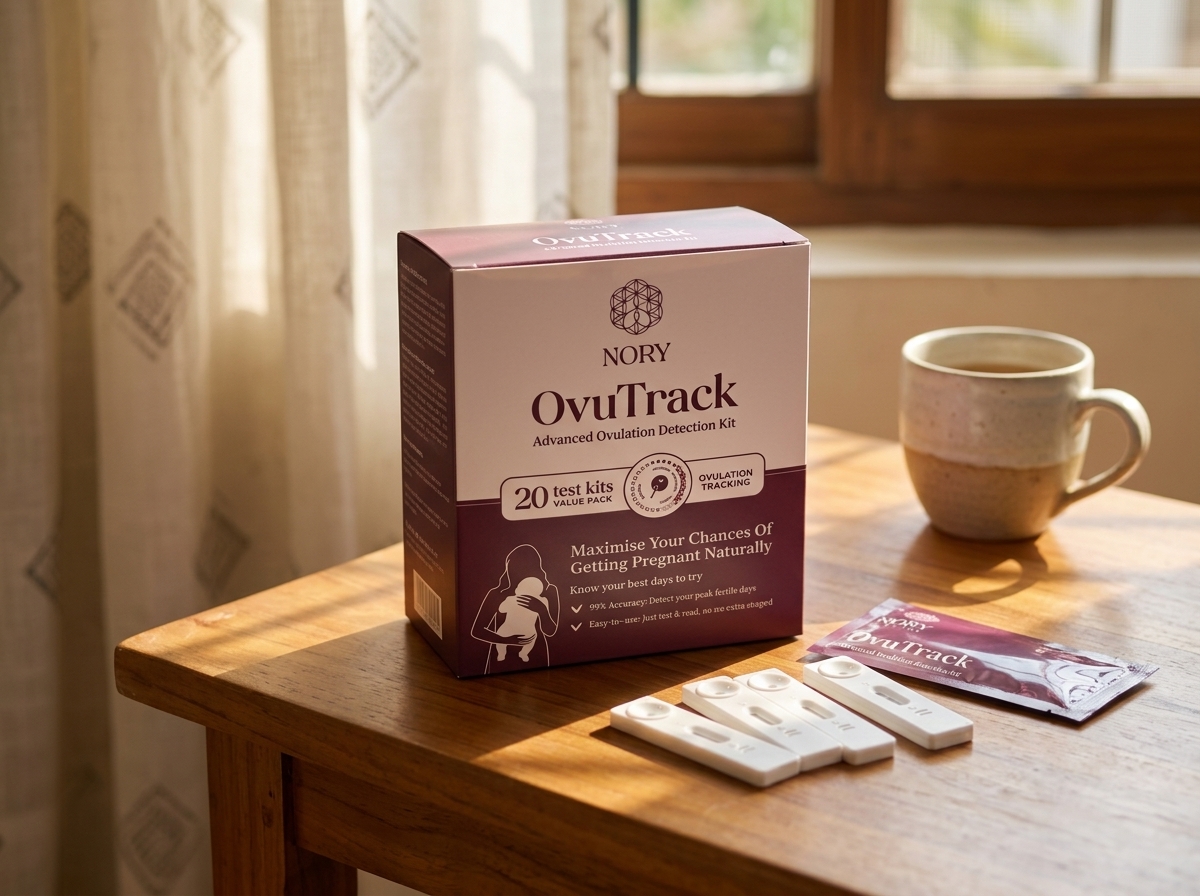
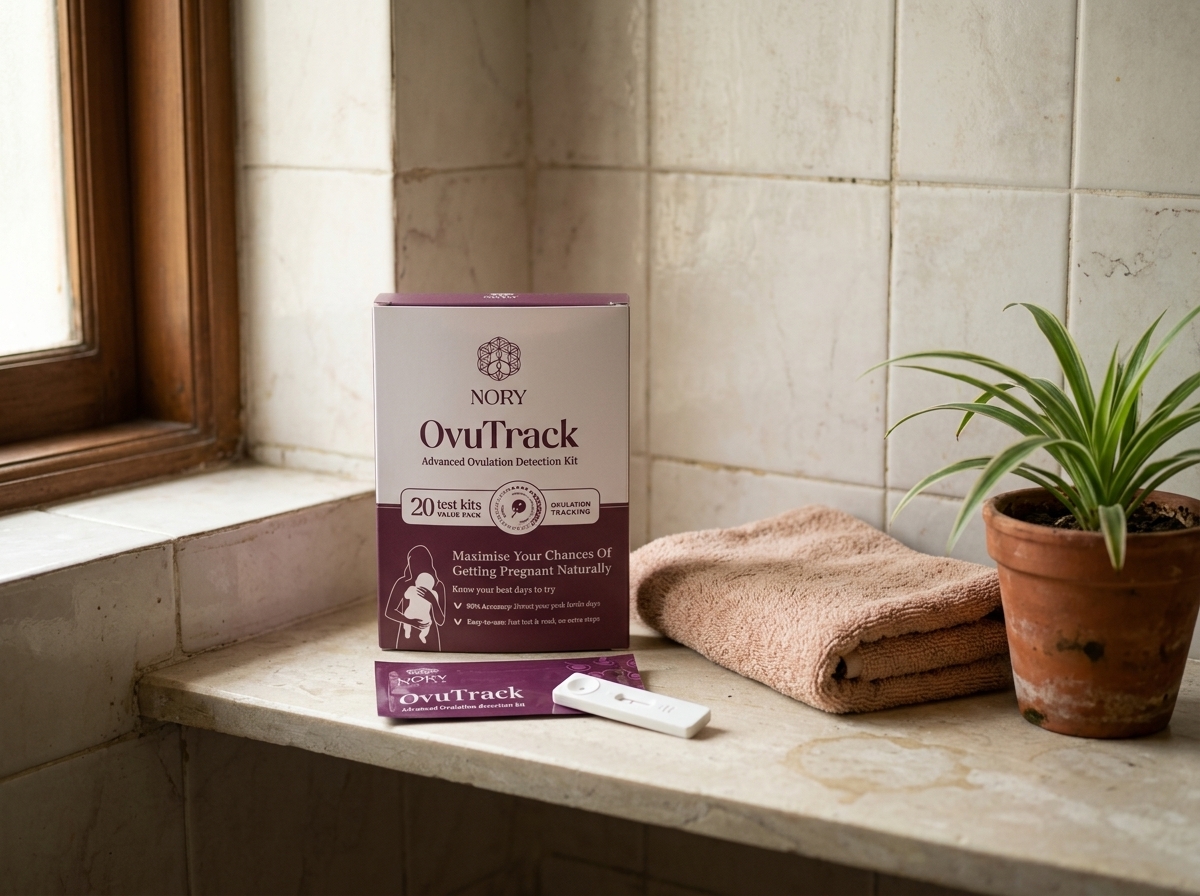
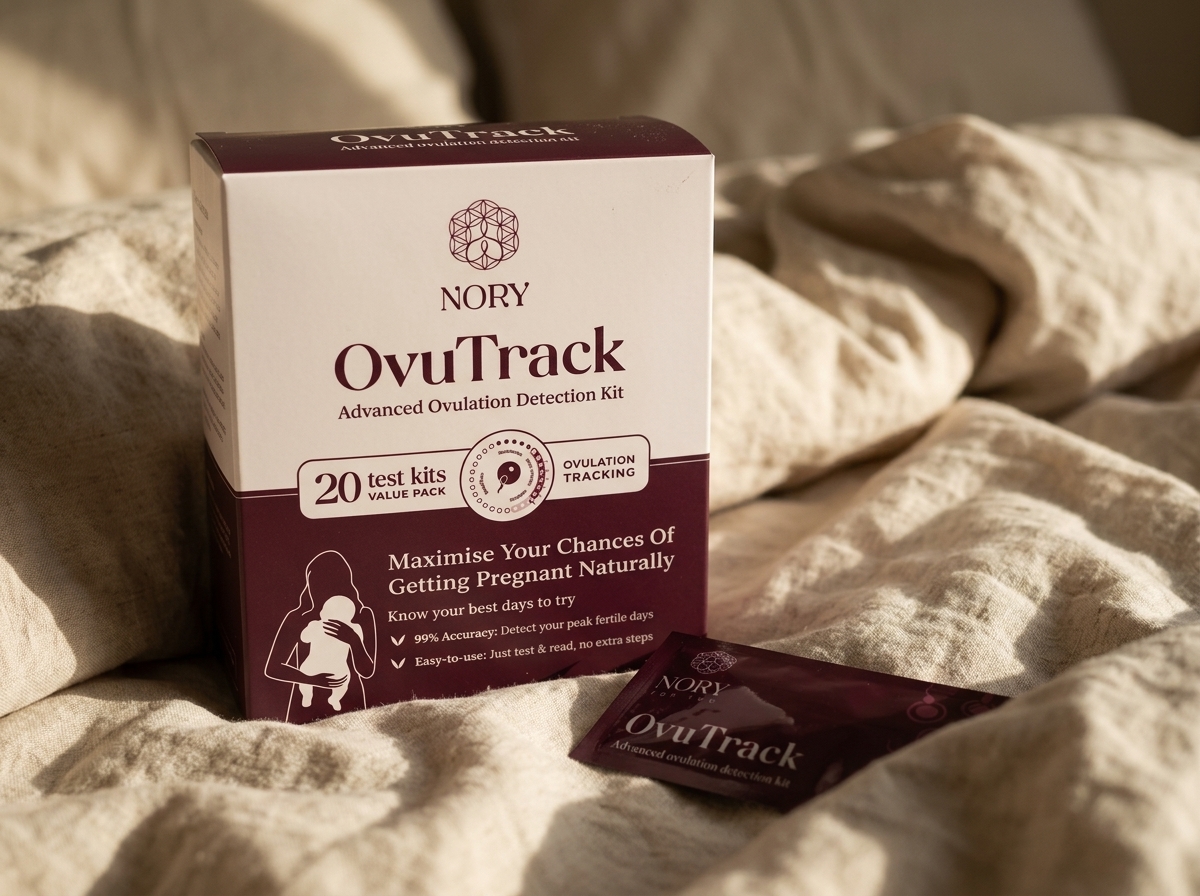
The Nory OvuTrack Ovulation Test Kit is a simple, at-home test that helps you detect the LH surge, providing a clear indication of your peak fertile window. By testing your urine with the strips provided, you can identify your LH surge and time intercourse for the best chances of conception, removing much of the guesswork associated with physical signs. This can be particularly helpful for individuals with irregular cycles or for anyone who finds their physical symptoms ambiguous.
You can find the Nory OvuTrack Ovulation Test Kit on our website. It is also available on Amazon.
For some couples, difficulty with timed intercourse due to issues like performance anxiety or vaginismus can be a challenge. In these specific situations, some may consider at-home insemination as a private option. It is not a treatment for underlying medical issues and is not the right path for everyone.
Exploring the Limitations of Signs and Tests
It's important to understand what ovulation tracking methods can and cannot tell you. Physical signs are subjective and can be inconsistent. Ovulation tests are excellent at detecting the LH surge that precedes ovulation, but they do not confirm that an egg was actually released. In rare cases, an LH surge can occur without the subsequent release of an egg (a condition known as Luteinized Unruptured Follicle Syndrome).
Furthermore, achieving pregnancy involves many factors beyond just timing. Egg quality, sperm health, and overall reproductive wellness are all crucial components. Therefore, while tracking ovulation is a vital tool, it is one part of a larger picture. A holistic approach that includes a healthy lifestyle and open communication with a healthcare provider is the most effective strategy.
When should you see a doctor about ovulation or conception?
While many couples conceive within the first year of trying, it can be helpful to know when to seek professional advice. It is generally recommended to consult a doctor or fertility specialist if you:
- Are under 35 and have been trying to conceive for over a year.
- Are over 35 and have been trying to conceive for over six months.
- Have very irregular periods, or no period at all, which could indicate you are not ovulating regularly.
- Have a known medical condition that can affect fertility, such as Polycystic Ovary Syndrome (PCOS) or endometriosis.
- Have experienced recurrent miscarriages.
A doctor can perform tests to confirm if you are ovulating and help identify any underlying issues that may be affecting your fertility. They can provide guidance tailored to your specific situation and discuss potential treatment options if needed.
Frequently asked questions
Can you ovulate without any symptoms?
Yes, it is very common to ovulate without any noticeable physical symptoms. Many people do not experience ovulation pain, significant changes in cervical mucus, or other signs. This is why using an ovulation test kit can be particularly beneficial for identifying your fertile window.
Is cervical mucus a reliable sign of ovulation?
For many, changes in cervical mucus are a reliable indicator of approaching ovulation. The presence of clear, stretchy, "egg-white" mucus is a strong sign of peak fertility. However, its reliability can be affected by factors like medications, hydration levels, and certain health conditions, making it less dependable for some.
What is ovulation pain and is it normal?
Ovulation pain, or mittelschmerz, is a mild, one-sided pain in the lower abdomen that occurs around the time of ovulation. It is considered a normal and harmless symptom experienced by about 20% of ovulating individuals. While uncomfortable, it is not usually a sign of a problem.
How accurate are at-home ovulation tests?
Most commercially available at-home ovulation tests are highly accurate at detecting the LH surge that precedes ovulation. It is important to follow the test instructions carefully for the most reliable results.
Can ovulation tests confirm that an egg was released?
No, ovulation tests confirm the presence of the LH surge, which is the hormonal trigger for ovulation. They predict that ovulation is likely to occur within 24-36 hours. They do not, however, confirm that an egg was successfully released. Confirmation of ovulation is typically done through a blood test measuring progesterone levels or via ultrasound.
References
- Cleveland Clinic — Ovulation: Calculating, Process, Pain & Other Symptoms (2026)
- The Bump — Ovulation Symptoms and Signs (2026)
- National Institutes of Health (NIH) — Physiological Signs of Ovulation and Fertility Readily Observable by Women (2013)
- Mayo Clinic — Ovulation signs: When is conception most likely?
- American College of Obstetricians and Gynecologists — Evaluating Infertility
how to know if you are ovulating
what are the signs of ovulation
cervical mucus ovulation
ovulation pain meaning
basal body temperature ovulation
ovulation test vs symptoms
how to track ovulation with irregular periods
is it normal to not have ovulation symptoms
when am i most fertile to get pregnant
how to use ovulation predictor kits