

Can You Get Pregnant Right After Your Period?
This article is for informational purposes only and does not constitute medical advice. Please consult with a healthcare professional for any health concerns or before making any decisions related to your health or treatment.
Can You Get Pregnant Right After Your Period?
Key Takeaways
- Yes, You Can: It is entirely possible to get pregnant right after your period, especially with shorter menstrual cycles.
- Sperm Survival is Key: Sperm can live in the female reproductive tract for up to five days, extending your fertile window.
- Calendars Can Mislead: Traditional calendar methods often fail to capture individual ovulation timing, which doesn't always happen on day 14.
- Know Your Window: Ovulation test kits offer a reliable way to pinpoint your most fertile days by detecting the hormonal surge before ovulation.
Yes, it is possible to get pregnant right after your period. This can happen if you have a shorter menstrual cycle or ovulate earlier than average, especially when you consider that sperm can survive in the female reproductive tract for several days. For adults and couples in India trying to conceive, understanding the specifics of your personal fertility timing is a crucial first step.
Many believe the days immediately after a period are 'safe' and not part of the fertile window. However, understanding your unique cycle and how long sperm can survive is key to knowing when you are most likely to conceive. Later, we'll explore how ovulation tests can help pinpoint this window accurately, removing the guesswork from the process.
Understanding Your Unique Cycle: Why Timing Matters
The "textbook" 28-day menstrual cycle, with ovulation on day 14, is just an average. In reality, many women have cycles that are shorter or longer, and ovulation can occur at different times. A cycle is measured from the first day of your period to the day before your next one begins. If your cycle is short, for instance, 22 days, your ovulation could happen as early as day 7 or 8. This could be just a few days after your period has ended.
This variability is why relying on a generic calendar can be misleading. Your personal fertile window is the few days leading up to and including the day of ovulation. Knowing this unique timeline is essential when you are trying to get pregnant.
The Role of Sperm Survival in Early Conception
One of the most important factors in getting pregnant soon after your period is the lifespan of sperm. Under the right conditions inside the female reproductive tract, sperm can survive for up to five days. This means that if you have intercourse on day 7 of your cycle and ovulate on day 11, conception is still possible because viable sperm may be waiting for the egg to be released.
This five-day survival window significantly extends the possibility of pregnancy. It creates a fertile period that can start much earlier than many people assume, often overlapping with the days immediately following menstruation.
Why Calendar Tracking Can Be Misleading
For decades, couples have used calendar-based methods to predict ovulation. While simple, these methods assume a level of regularity that doesn't apply to everyone. Stress, diet, travel, and other factors can shift your ovulation from one month to the next. Relying solely on a calendar can lead to poorly timed intercourse and months of frustration.
An inaccurate calendar can create a false sense of security or a missed opportunity. If you believe you only ovulate on day 14, you might miss your most fertile days entirely if they fall earlier or later in your cycle. This is where modern tools can provide much-needed clarity.
How Ovulation Tests Pinpoint Your Fertile Window Accurately
Instead of guessing, you can track a key fertility hormone directly. Ovulation tests work by detecting a surge in Luteinizing Hormone (LH) in your urine. This LH surge happens about 24-36 hours *before* you ovulate, giving you a clear and accurate signal that your fertile window is at its peak.
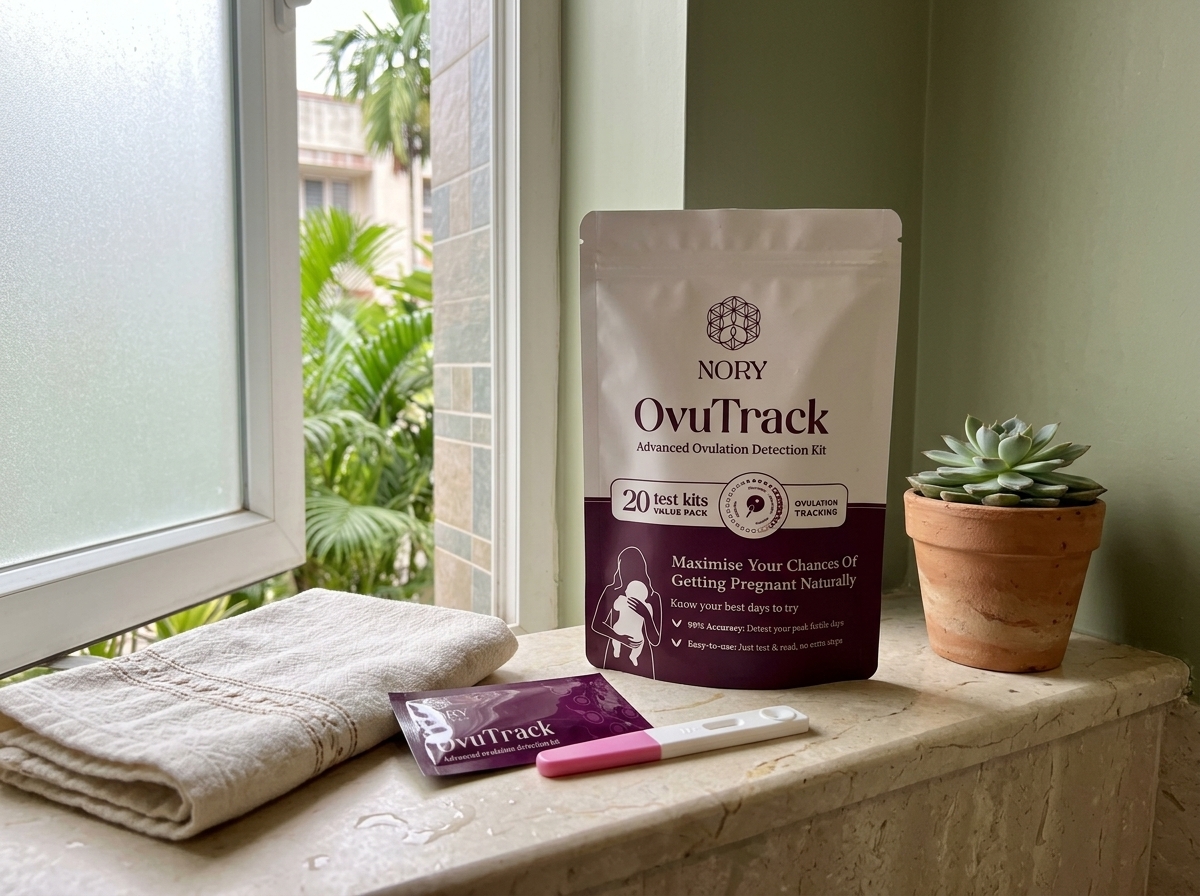
The Nory OvuTrack Ovulation Test Kit is designed to make this process simple and reliable. By testing on the days following your period, you can identify your personal LH surge and time intercourse with confidence, maximizing your chances of conception. It removes the uncertainty that calendar methods create. You can find it on our website or also available on Amazon.
Exploring At-Home Options When Timed Intercourse is a Challenge
Knowing your fertile window is the first step, but for some couples, timed intercourse can be stressful or difficult for a variety of reasons. Some people consider at-home insemination options when vaginal intercourse is challenging. This approach allows a couple to place sperm closer to the cervix using a sterile, easy-to-use kit in the privacy of their own home.
The Nory IVI Kit is a doctor-designed, at-home self-insemination kit that provides a simple and private alternative. It is not a treatment for underlying medical issues and is not for everyone, but it can be a helpful tool on the path to parenthood. Find it on our website or also available on Amazon.
Deciding When to Test for Pregnancy
After timing everything correctly, the next phase is the two-week wait, which can be filled with anxiety. You might be tempted to test for pregnancy very early, but testing too soon can lead to a false negative. It takes time for the pregnancy hormone, hCG, to build up to detectable levels.
For the most reliable results, it's best to wait until the first day of your missed period. However, some sensitive tests can detect hCG earlier. The Nory Pregnancy Test Kit is designed for early detection, but remember that a negative result before a missed period should be confirmed by retesting if your period doesn't start. You can get it on our website or also available on Amazon.
| Menstrual Cycle Length | Estimated Ovulation Day | Fertile Window Starts Around |
|---|---|---|
| 21 Days | Day 7 | Day 2 |
| 24 Days | Day 10 | Day 5 |
| 28 Days | Day 14 | Day 9 |
| 32 Days | Day 18 | Day 13 |
Knowing When to See a Doctor
While at-home tools can empower your journey, it's important to know when to seek professional medical advice. Consider consulting a doctor or fertility specialist if:
- You are under 35 and have been trying to conceive for over a year.
- You are over 35 and have been trying for six months.
- You have irregular periods, a known medical condition like PCOS or endometriosis, or a history of pelvic infections.
- You have concerns about male factor infertility.
A doctor can provide a comprehensive evaluation and recommend a personalized plan for you.
Frequently Asked Questions
How many days after your period can you get pregnant?
You can get pregnant as soon as 3-4 days after your period ends, or even earlier, depending on your cycle length and when you ovulate. Since sperm can survive for up to five days, intercourse just after your period could lead to conception if you ovulate early.
Can you get pregnant if you have a short menstrual cycle?
Yes, having a short menstrual cycle (e.g., 21-24 days) increases the likelihood of getting pregnant soon after your period. Early ovulation is common with shorter cycles, meaning your fertile window may begin almost immediately after menstruation stops.
How long can sperm survive inside the female body?
Sperm can survive in the female reproductive tract for up to five days under optimal conditions. This extended survival time means that intercourse several days before ovulation can still result in pregnancy.
Is it possible to ovulate right after your period?
Yes, it is possible, especially for women with short menstrual cycles. Ovulation can occur within a few days of your period ending. Using an ovulation test kit can help you determine your unique ovulation timing.
When is the best time to take an ovulation test?
The best time to start testing depends on your cycle length. For a typical 28-day cycle, you might start around day 11. However, if your cycle is shorter, you should begin testing a few days after your period ends to ensure you catch the LH surge that precedes ovulation.
References
- Mayo Clinic. (2023). Ovulation signs: When is conception most likely?
- American College of Obstetricians and Gynecologists. (2022). Fertility Awareness-Based Methods of Family Planning.
- Eunice Kennedy Shriver National Institute of Child Health and Human Development. (2019). Menstrual Cycle Length.
- Wilcox, A. J., Weinberg, C. R., & Baird, D. D. (1995). Timing of sexual intercourse in relation to ovulation. Effects on the probability of conception, survival of the pregnancy, and sex of the baby. The New England journal of medicine, 333(23), 1517–1521.
- RESOLVE: The National Infertility Association. (n.d.). What Causes Infertility?
can you get pregnant after your period
how long after period can you get pregnant
can you get pregnant on day 7 of cycle
short cycle fertile window
early ovulation after period
sperm survival in female body
fertile window after period ends
is it possible to conceive immediately after period
ovulation day after period
can you get pregnant right after your period ends
how soon after period can ovulation happen