

How Early Can a Pregnancy Test Detect Pregnancy?
This article is for informational purposes only and does not constitute medical advice. The information contained herein is not intended to be a substitute for professional medical advice, diagnosis, or treatment. Always seek the advice of your physician or other qualified health provider with any questions you may have regarding a medical condition. Never disregard professional medical advice or delay in seeking it because of something you have read in this article.
How Early Can a Pregnancy Test Detect Pregnancy?

This guide explains the science behind early pregnancy detection, helping you understand when to test for the most reliable results. It covers the role of the pregnancy hormone hCG, test sensitivity, and provides practical tips to avoid the disappointment of a false negative.
- Understand the biological markers that make early testing possible.
- Identify the optimal time to take a pregnancy test after ovulation.
- Learn how to choose a test and use it correctly for accurate results.
- Know when to retest and when it’s time to consult a healthcare professional.
For couples trying to conceive, the wait to take a pregnancy test can be filled with anxiety and hope. The most reliable time to test is on the day of your missed period or after, but some tests can detect pregnancy much earlier. The key is a hormone called human Chorionic Gonadotropin (hCG), which your body starts producing only after a fertilized egg implants in the uterus.
How does pregnancy actually begin? The roles of implantation and hCG
Understanding when to test starts with understanding the first few days of pregnancy. Conception happens when a sperm fertilizes an egg, but pregnancy officially begins only after the resulting embryo travels to the uterus and attaches to the uterine wall. This crucial step is called implantation.
Implantation typically occurs between 6 to 12 days after ovulation. Once the embryo is implanted, the placenta begins to form and starts producing hCG. This hormone is vital for a healthy pregnancy and its levels double approximately every 48 to 72 hours in the early stages. It is the presence of hCG in your blood and urine that a pregnancy test is designed to detect.
When is the earliest you can take a pregnancy test?
While the urge to test immediately is strong, testing too early can lead to an inaccurate result. Since hCG is only produced after implantation, you need to give your body enough time for the hormone to build up to a detectable level. For some, this can be as early as 7-10 days past ovulation (DPO).
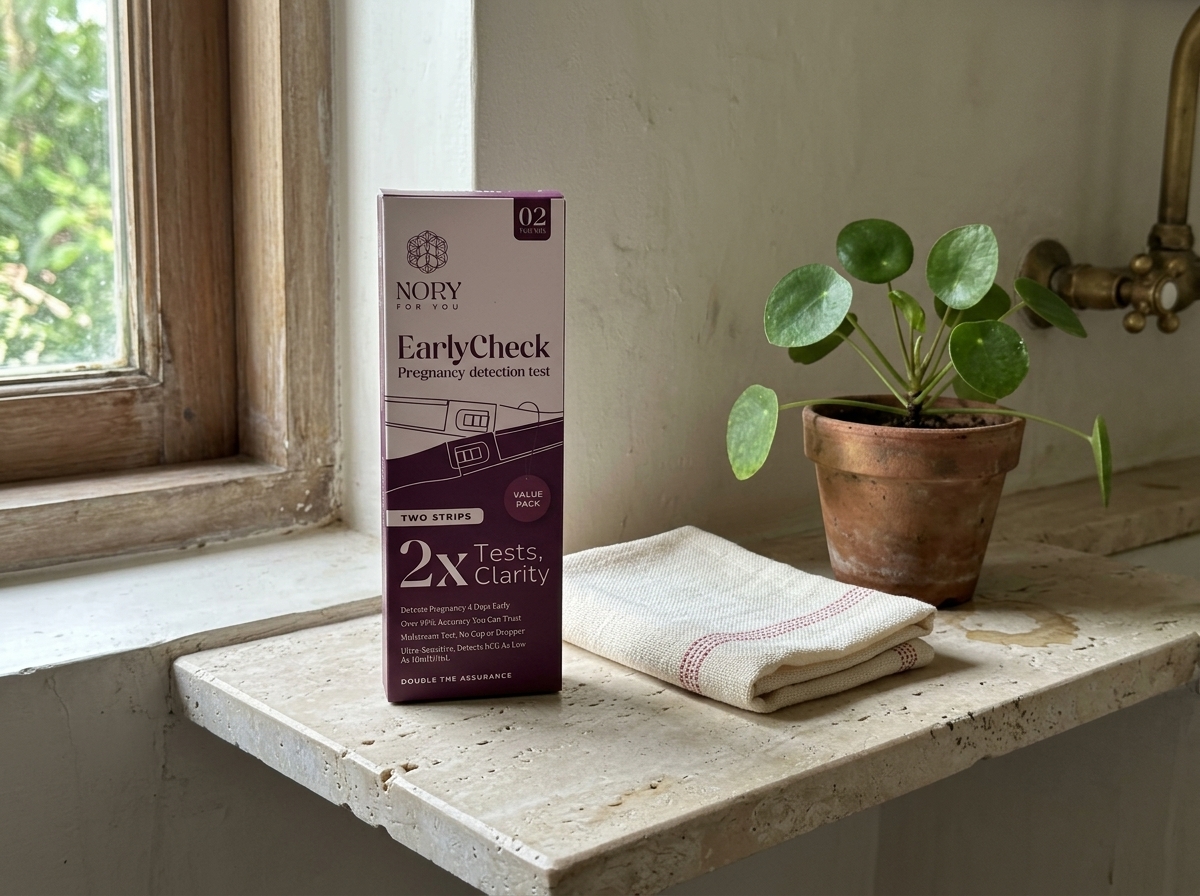
Some of the most sensitive home pregnancy tests may detect hCG up to six days before a missed period. However, testing this early comes with a higher chance of a false negative if your hCG levels haven't risen enough yet. For a more reliable result, it's often recommended to wait until the day of your expected period. The Nory Pregnancy Test Kit is designed for early detection, offering a clear answer when you need it most, but always follow the instructions for the best results.
Why do some tests detect pregnancy earlier than others?
The ability of a pregnancy test to detect hCG depends on its sensitivity. Test sensitivity is measured in milli-international units per milliliter (mIU/mL). The lower the mIU/mL number, the more sensitive the test is, meaning it can detect smaller amounts of hCG.
Tests with a sensitivity of 10 mIU/mL can detect pregnancy earlier than those with a sensitivity of 25 or 50 mIU/mL. This information is usually found on the test packaging. While a highly sensitive test is great for early detection, it's important to remember that every person's hCG levels rise differently.
| Test Sensitivity (mIU/mL) | Typical Detection Window | Best For |
|---|---|---|
| 10 mIU/mL | As early as 6-8 days past ovulation | Very early testing, before a missed period |
| 25 mIU/mL | Around 10-12 days past ovulation | Testing closer to the date of your expected period |
| 50+ mIU/mL | On or after the day of your missed period | Confirming pregnancy after a missed period |
What are the best tips for avoiding false negatives?
Getting a negative result, especially when you feel you might be pregnant, can be disheartening. A false negative often happens when you test too early and your hCG levels are still too low to be detected. Some couples may be using at-home insemination kits when vaginal intercourse is difficult for them, including due to a sexual problem, and the wait can be particularly anxious. This method is not a treatment and is not for everyone, but it highlights the diverse paths to parenthood and the shared desire for clear answers.
Here are some tips to ensure you get the most accurate result:
- Test at the right time: Wait until at least the day of your missed period for the highest accuracy. If you test earlier and get a negative result, consider retesting in a few days.
- Use first-morning urine: Your first-morning urine is the most concentrated and will have the highest level of hCG, making it easier for the test to detect.
- Don't drink too much water beforehand: Diluting your urine by drinking large amounts of liquid before testing can lower the concentration of hCG and potentially cause a false negative.
- Follow the instructions carefully: Ensure you use the test exactly as described in the package insert. Pay close attention to the waiting time for the result.
Are you using your home pregnancy test correctly?
Using a home pregnancy test is straightforward, but for reliable results, precision is key. Always start by reading the instructions included with your test, as different brands might have slightly different procedures.
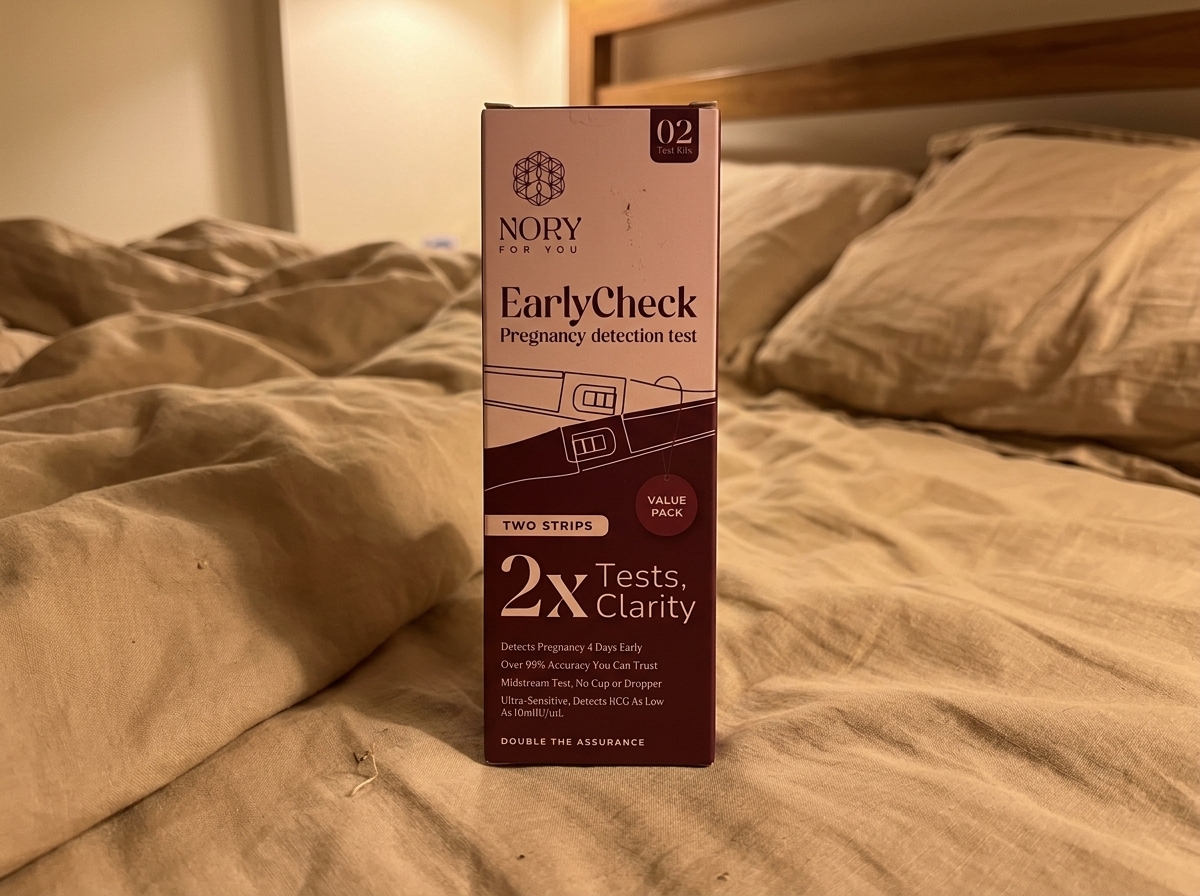
Most midstream tests, like the one in the Nory kit, follow a simple process. You will either hold the absorbent tip in your urine stream for a specified number of seconds or collect your urine in a clean, dry cup and dip the test in it. After waiting the designated time—usually a few minutes—you can read the result. A clear and accurate test helps remove doubt during a sensitive time.
Should you see a doctor?
While home pregnancy tests are highly accurate when used correctly, they are not a substitute for professional medical advice. You should schedule a visit with your doctor to confirm a positive home pregnancy test result. They can perform a blood test or an ultrasound to confirm the pregnancy and guide you on the next steps for prenatal care.
You should also see a doctor if you have missed your period but are still getting negative test results, or if you have any concerns about your fertility journey. A healthcare professional can provide a comprehensive evaluation and discuss the best path forward for you.
Frequently asked questions
What is the earliest DPO to get a positive pregnancy test?
The earliest you might get a faint positive is around 8-10 days past ovulation (DPO). However, to avoid a false negative, it's best to wait until 12-14 DPO or the day of your expected period.
Can you get a false negative if you test too early?
Yes, testing too early is the most common reason for a false negative. If you test before your body has produced enough hCG, the test won't be able to detect it, even if you are pregnant. Retesting after a few days is recommended.
How long after implantation bleeding can I take a pregnancy test?
Implantation bleeding is light spotting that can occur when the embryo attaches to the uterine wall. It's best to wait at least 3-4 days after the spotting stops to take a pregnancy test to allow hCG levels to become detectable.
Does drinking water affect a pregnancy test?
Yes, drinking a lot of water or other fluids right before testing can dilute your urine and lower the concentration of hCG. This can lead to a false negative, especially in very early pregnancy. Using first-morning urine is ideal.
How accurate are early detection pregnancy tests?
According to the NHS, home pregnancy tests are over 99% accurate if you test from the day of your expected period. The accuracy of tests taken before a missed period is lower and varies by brand, as it depends on the test's sensitivity and the individual's hCG levels.
References
how early can pregnancy be detected
how many days after ovulation can you test for pregnancy
pregnancy test before missed period
false negative early pregnancy test
when to take a pregnancy test after conception
what is hCG and when does it appear
implantation bleeding and positive test timeline
earliest DPO to get positive pregnancy test
accuracy of early pregnancy tests
sensitive pregnancy test mIU/mL
positive pregnancy test timeline